On ‘Date’: A Conversation with Playwright Jake Flum
BY MADELINE BLAIR
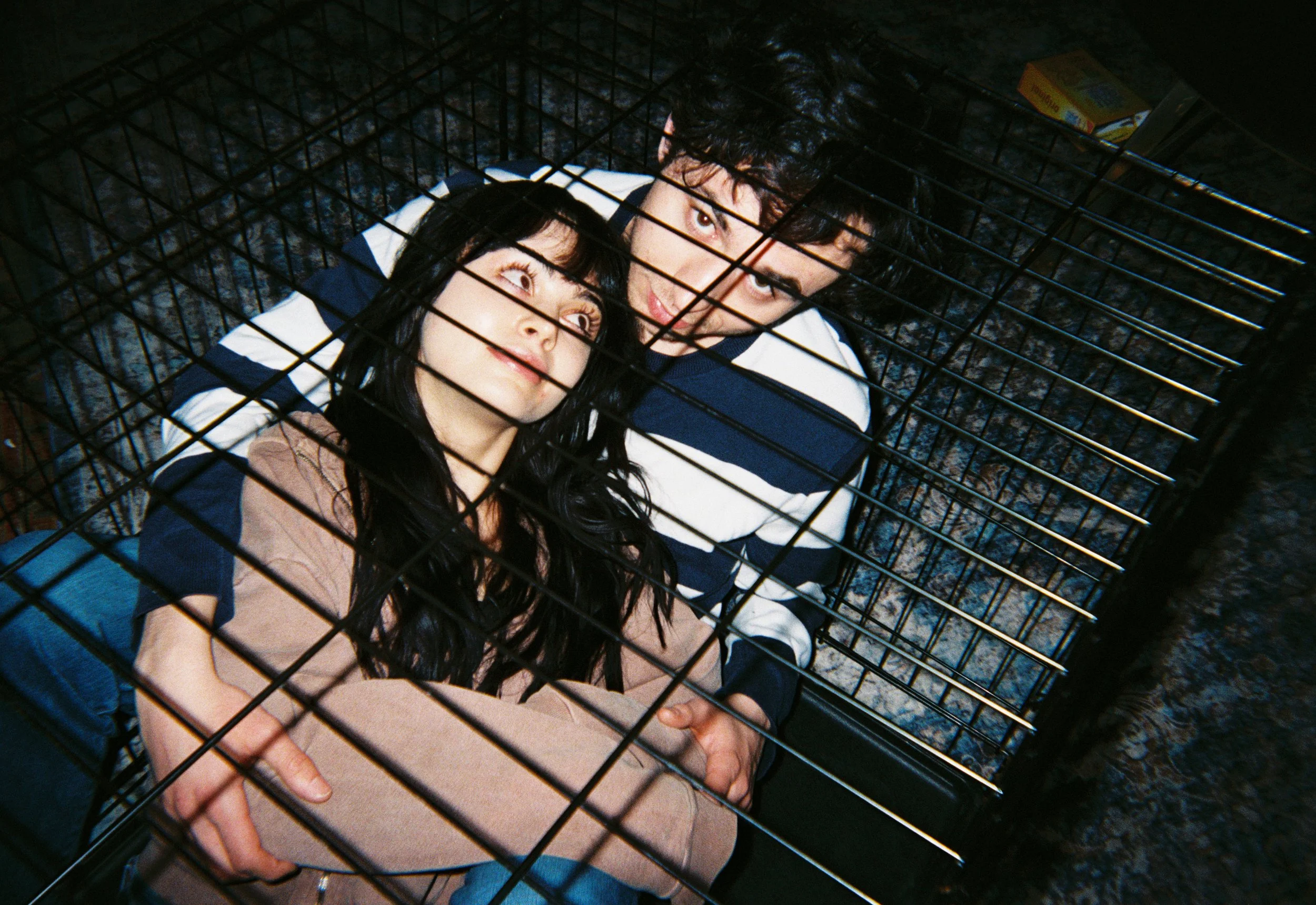
Actors Ilirida Memedovski and Danny Tramontana. Photo courtesy of Facility Theater.
I was mindlessly scrolling through Instagram, as one does, until I saw a peculiar photo that caught my eye: what seemed to be a dog cage containing a girl I’m mutuals with but didn’t know well, gazing up toward some guy coyly holding her.
Upon curious investigation, I discovered through the profile that the photo was a promotion for Date, a new play at Chicago’s Facility Theater. The logline in the caption read, “Charlie and Anna are on a date. He asks her to get in a cage and she does. An examination of identity, pornography, and what we show to each other.” My interest was piqued. I had been dearly missing theatre—I hadn’t attended nor acted in a play in years—so when I noticed they had mask-required performances scheduled, I immediately bought a ticket.
What I didn’t know until weeks later—when I settled into my seat in their humble Humboldt Park theater, covered my phone camera with the provided sticker to protect the show’s sensitive content, and the house lights dimmed—is that this would be the single most affecting, thrilling, heart-wrenching experience as a theater-goer I would have to date (no pun intended).
Written by Jake Flum and directed by Ava Calabrese Grob (Pussy Sludge), Date is not your average romantic comedy. Anna (Ilirida Memedovski) and Charlie (Danny Tramontana) sit down for a dinner date, cower in a dog cage, lament about the impossibility of connection, swap clothes and strip down for a primal pillow fight, hold each other in a slow dance while holding back tears. It is unabashedly absurd and violently vulnerable, chewing at the heartstrings like spaghetti dinner. And that night was one of two mask-required performances, a vital highlight that this production cares about accessibility and safety.
I had the pleasure of meeting the director and both actors after the show, but it wasn’t until I came full circle to sing its praises on my Instagram story that I would become acquainted with the playwright, Jake, and have the opportunity to pick his brain in this interview on this play I just adored. Read our conversation below, edited for length and clarity.
Last chance to see Date at Facility Theater on Saturday, May 16th, 8 pm.
Madeline: What is your background in theater, and what other productions or life events have brought you to eventually writing Date?
Jake: I'm from Seattle, Washington, originally, but I've lived in Chicago for seven years. I moved here after I graduated college. Studying sketch comedy at Second City got me into writing for the first time. I slowly experimented with form enough that I wasn't really doing sketch comedy anymore, but I liked to keep it as—maybe you can even kind of see in the play—I really like to keep things based on a thesis. I really like how sketch is based on the core of what is interesting about a dynamic or an image, so I still feel like I held on to that.
Eventually I made my way to head my own sketch group, and I got into a show at Rhino Fest, which is Chicago's best fringe theater festival, in my opinion. It's hosted by Curious Theatre Branch. They're really old-school Chicago-storefront theater-makers, and they just kind of do it for the fucking game, and they love it. They do it cheap, and they do it fast, and they experiment a lot, and they give you a space for free to produce your show. I fell in with some people out of the Prop Thtr where they worked—one collaborator in particular, we started a program called I Hate Mondays, and it was this kind of messy, gross, quick, punk theater in the Neo-Futurists vein. I think we were more interested in the illusion, while Neo-Futurists is very non-illusory, it's very real, which I have a lot of respect for too—I've done classes there.
We developed a little bit of an audience at Prop Thtr, and then we made our own theater company called HATE/LAB, and eventually Prop went down during early Covid, HATE/LAB remained. We were kind of an anarchist theater collective—it still is, it's still active—and I wrote my first play with them called ANIMAL PLAY. I made it with a collaborator, Steak Richardson, that was done kind of outdoors, like an early Covid-era play. Then my second one, PERFORATED PLAY, was produced by HATE/LAB and the Runaways Lab Theater, who are still active as well at Facility, and that kind of put us on the map a little bit. People were excited about it, but more importantly, I also was honing and building confidence to write longer and longer stuff.
I am not a writer type; I don't write poetry, I don't write books, this is kind of what I do, and I don't try to say too much either, so this is all kind of an experiment, seeing how far I could stretch these ideas. There was a long period of development on this one before it came out, and I was asked to be in Facility as a company member with a couple of friends of mine, Ava and Maggie and Danny as well.
Madeline: You said you were developing Date for quite a long time, but I'm curious, why did you write it? What was your intention with it, and while you were writing it, were there any other similar plays, films, books, anything that inspired you? Or was it more just a straight-from-the-heart type thing?
Jake: For sure, there were many things that inspired it for me... That's a big question for me for this particular piece, because this play has gone through a lot of different stages. I felt like what was important was to talk about something that I didn't have an answer to and that I found difficult to describe. I've always said that if I could describe exactly what I mean, I should just tweet about it or write an essay or something.
I was watching a lot of Lynch in the process of writing this, but also my big favorite playwrights I pulled from like crazy, like Sarah Kane and [Harold] Pinter, who I think do a good job of writing that emptiness. They're able to gesture at things but not tell you what it is, so it’s enough to not just allow you to fill it in, but really capture this kind of untouchable sensation.
I don't know, it's not clean. These are questions that you're asking, and they beget questions, and that's much more interesting. What is the most difficult stuff that is challenging me and that I don't have the answers to in myself? At the same time, I was reading all these people who do a really good job of writing questions, and—isn't that a Godart quote, or maybe it's Picasso, honestly, like, “Computers are unhelpful because all they provide is answers.”
I do think that there is something so tantalizing about art that lives in this world of questions. I looked and found I was struggling a lot, and still am in a way, but this process has been helpful with my own experience with toxic and socialized masculinity—especially in the way that I interface with women. I think my relationship with pornography I was really struggling with, but also interested in. These are things that I wasn't sure about. I didn't know exactly how to describe the discomfort that I felt, but I wanted to gesture at it, because I thought it'd be interesting and helpful to me to explain this, and hopefully helpful and interesting to other people as well to see that excavated.
Basically, I was interested in asking questions about things I had no answers to. And some of my favorite playwrights and creators do that.
Madeline: I really admire that. I feel like some of the best work, like you were saying, it's not trying to give you the answer to something, but get you to think about it. Because all art comes from human curiosity and experience, and none of us, I think, have the answers to anything. Probably most people, at least once a day, are wondering, “Why am I here? What am I doing?”
Jake: Right, right, right.
Madeline: My next question goes into this really well. The opening epigraph reads, "What ties me to you is guilt," from Sarah Kane’s Crave—who you mentioned. For you, how did that inform the tone going into the date night that was central to this play and the relationship between the characters? How long did you envision Charlie and Anna having known each other before the events of the play, and what would you say about their own respective guilts in the thread of this? I know that's a three-pronged question, but...
Jake: That's a brutally hard question. Can you give it to me one more time?
Madeline: Yes, well, let's break it down. How long did you envision Charlie and Anna having known each other before the events of the play? Did you have that in mind?
Jake: Yeah, that's an easy one: I don't know.
Madeline: Okay!
Jake: Yeah. I mean, the first time I wrote this play, it was, or the first scene... I mean, I don't know.
Madeline: I have ideas. I have guesses.
Jake: What do you think?
Madeline: I feel like they probably met on a dating app, at least a couple weeks before, but I feel like this was maybe their second time hanging out. It's awkward enough where they clearly don't know each other well, which is what makes it really fascinating that it gets so deep and dark and down under so quickly.
Jake: Amazing. Yeah, yeah, yeah, that's interesting.
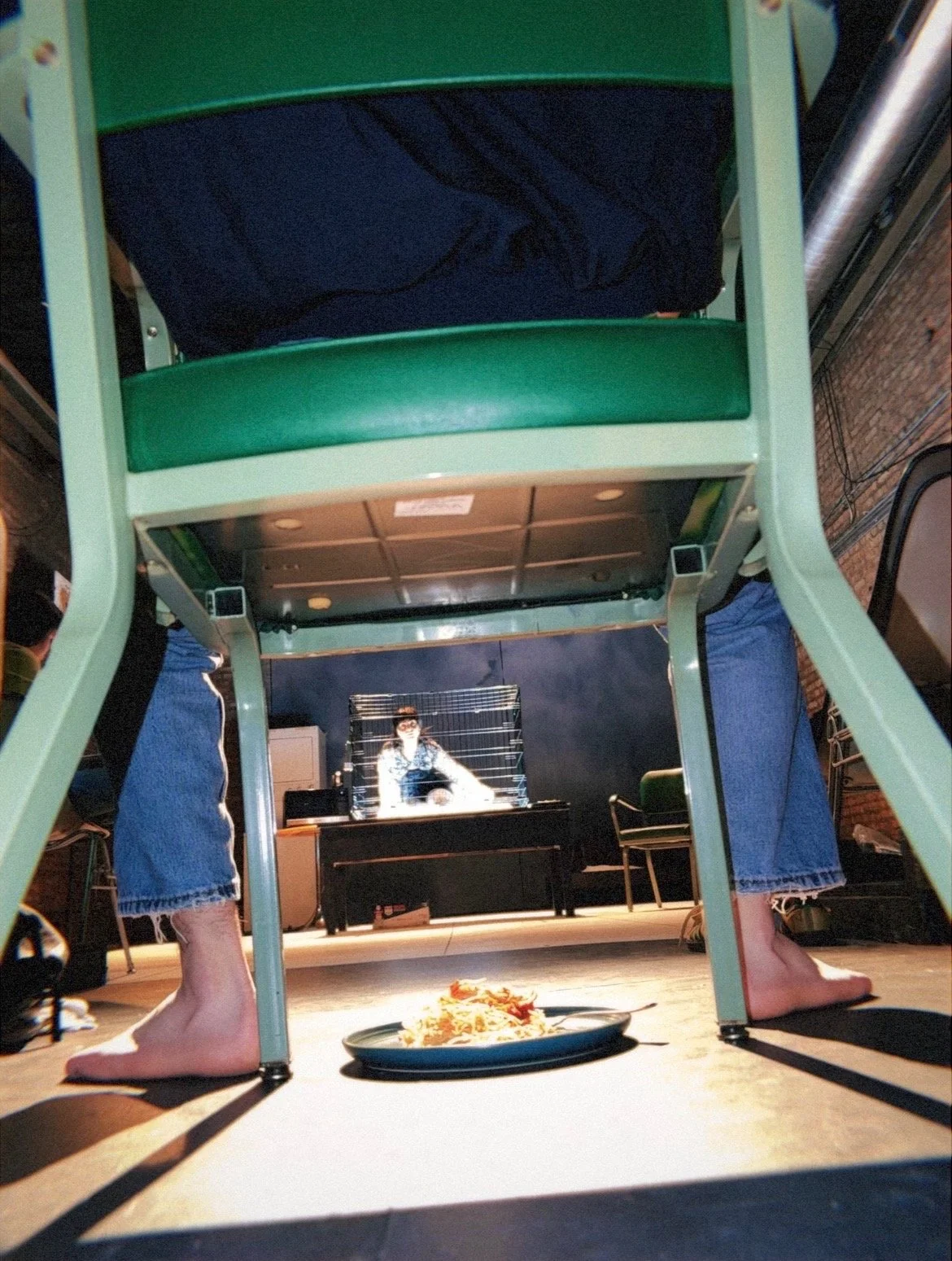
Actors Ilirida Memedovski and Danny Tramontana in a scene from Date. Photo courtesy of Facility Theater.
Madeline: Guilt is such an interesting concept in this. I'm curious where that epigraph came in for you, because I don't think it was publicized at all. So it feels like it's kind of just for you and those working on the show, then.
Jake: Yeah, it is, and I appreciate you mentioning it, honestly, because I love to talk about it with some relevance to the production process, because it was really helpful. There's a couple of important things that are pulled from that quote, I think. First of all, Sarah Kane's Crave, if you've ever read the play—have you heard that one?
Madeline: No, I've never read her stuff.
Jake: She's one of my favorites, for sure. I recommend you check her out. She wrote five plays, and Crave is the fourth one. It's really where I think she began, in her career, writing to kind of dissolve the things that were not fundamental. Crave drops character names—they're indicated by an initial—I think she's talked about not wanting to have that informed too much, and really have that live in the text and be projected upon. There's a really interesting thing going back to about how many times that they've been on a date [in Date]; it was a helpful piece for me, because on a writing basis, Crave becomes very fundamental. It really reduces these sayings. On the page, all you have is the words, and so you have to kind of use them to inform what's happening, with very little else. That's a very powerful relationship to have to a piece of text, where it's up to you. It's not telling you what to do. I was moved by that and impressed by it, and I found her inspiring.
Crave is also about love. It's about a really brutal depiction of love. For me, I think assault is a topic of Crave. So I'll say there's a bit of a trigger warning here, if that's okay. But finding out the meaning of love through everything, even violence, and navigating your way towards the healing power of love as a victim of this is a really fundamental element of Crave, and that was... I'm, like, tearing up. That play’s just such a beautiful, and I think honest, depiction of something that she struggled with. She couldn't say it, but she could gesture at it—she could make an outline of it with these words. That was very meaningful to me. So the text of Crave is very important to me.
But then the words themselves, “What ties me to you is guilt.” I mean, it's just, first of all, fucking banger, by the way. But Crave, I think, is really about being a victim of abuse, among other things. Not just about being victim, but also fucking being a person throughout it. I think that this play is hopefully in conversation with it, in that I think this play is about abusing to an extent. Maybe not as intentionally as it is in Crave, but not not that way, you know. I was kind of hoping to have that be an echo, and then that line is about that.
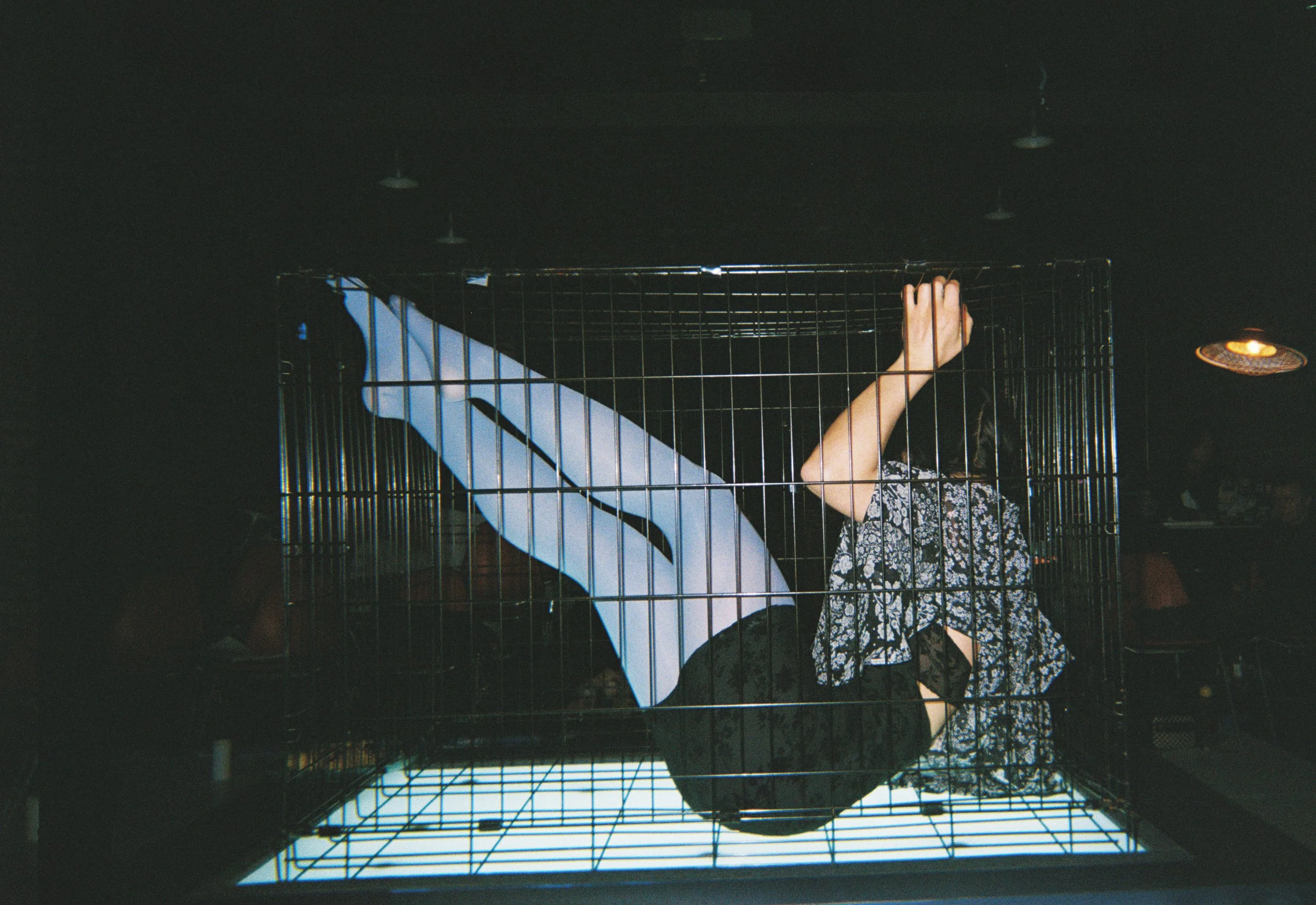
Actress Ilirida Memedovski as Anna. Photo courtesy of Facility Theater.
Madeline: With humans throughout history, it's cool to have art be in conversation with each other like that, and you talking about Crave and how Date for you is sort of about abusing but in a different kind of way, it really reminded me of—I know it's that cheesy quote, “Hurt people hurt people”—but it felt like two very disturbed individuals grasping at love in the most intense, futile way that they could.
As I said, the physical centerpiece of this play is a cage. Charlie puts a dog cage on the dining table and asks Anna to get into it midway through their dinner date in his apartment, and she obliges. I don't think this is a brand new invention. I also was reminded a bit of the glass cage in the first season of the show You with Penn Badgley, if you're familiar, but what you do with the cage and how it becomes a world of its own is unlike anything I've seen before. I would like to hear a little bit more about where this came from and what you intended with it.
Jake: I, unfortunately, need to say that it's important that my reaction to this object is different than yours. I don't want to color this object in one way. I think it's very important for people to have a reaction to that object that is unique to them, and to impress upon it, because it's just full of… I mean, first of all, the You connection is interesting. Cages have been everywhere. I'm very interested about, honestly, the relationship that Black people would have to this play, that transgender people would have to this play… I think that this cage will have a core impact on people that is pulled from your cultural memory and also personal history. My goal in a piece like this, to generate those conversations would be my dream.
I have a very specific answer in my head, but crucially, it's not what it is supposed to be for everyone, and I'd be happy to share it on the basis of my feelings, but that's the extent that I would want it to go. I wouldn't want it to color what its intention is for.
Madeline: I'm thinking back to how that's part of the logline, so you know what happens, but you're wondering when and how it shows up. I like that you're letting people impress their own things on it. I don't know if you want to say what your feelings are, or if you want to leave it mysterious.
Jake: It's not so much mysterious. I mean, what is a cage? This is a binding, right? This is an enclosed space that you can't get out of. Him asking this woman to get in one, that is pretty straightforward, right? It's not on the basis of me wanting to be mysterious. I think it's on the basis of it wanting to be fundamental enough that it is evocative of what it is trying to do, which is that he doesn't want her to move or be able to be free or stand up, which you can take that with what you will.
Madeline: Especially on a date, it is a terrifying connotation, with me saying earlier I feel like they didn't know each other well before the date. For someone you don't know well, perhaps even the first date doing that, that is also a huge level of trust, which I feel is a really important theme of the play.
Jake: Interestingly, yeah, and to the point about sadomasochism as well, I think there's a line that's toed in that regard too, where there's certainly a pleasurable—dare I say, somewhat sexy—game that is being played with this object as well.
Madeline: This particular genre of play is one that I really admire, one that feels hyper vulnerable and raw in its relationship dynamics, but the dialogue and the action between the characters and therefore the audience’s experience is heavily absurd in the most perfect way. So many things feel off and unsettling, and this can be anything from Charlie laughing and clapping a bit too long at one of Anna's jokes, their slow-dancing mid-argument, or a fully primal, animalistic pillow fight as an endcap to a date night in. I want you to tell me how you built the strange world within this apartment and how you gave life to these two characters as you were writing them.
Jake: Oh, no problem. This is going to be a total Ava [the play’s director] answer. I'm gonna gush right here, because the table work for—well, okay, first of all, this play, if you take a look at it, it doesn't even really have punctuation, you know.
Madeline: I noticed that! It's very textual, like text-speak.
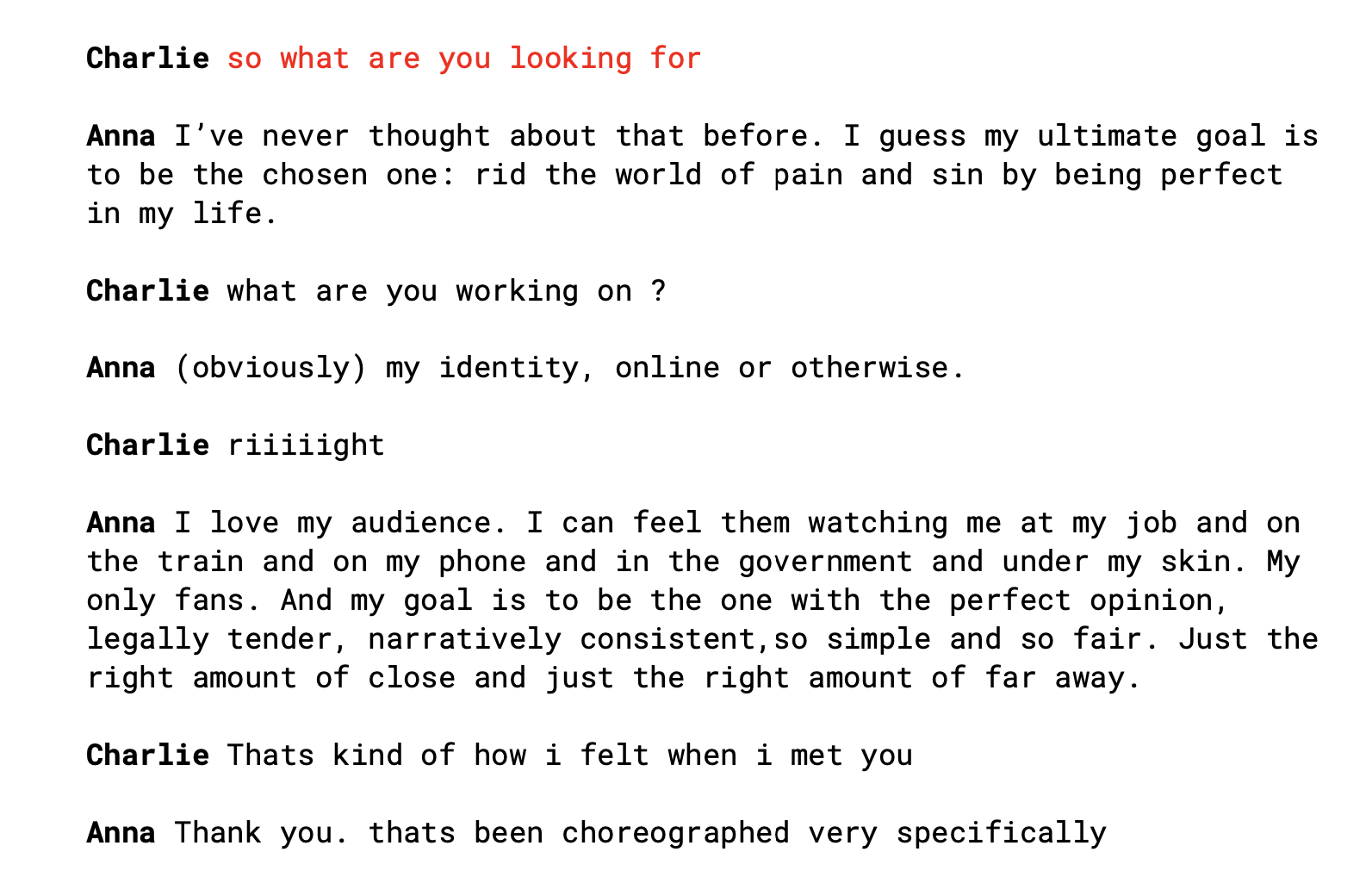
Snippet of the Date play script. Courtesy of Jake Flum.
Jake: Definitely. It's very much pulled from the way that we speak to each other in these kind of limited phrases, and sure, the way we text. I try not to direct my plays as I write them. Just really the fundamental action and story is in there: the spaghetti, the music, the cage, entrances and exits, the nudity.*
(*A revealing note from the editor: To the points made of gender expectations, pornography consumption, and the degradation of women, I had assumed going into the play that the nudity would have been of the woman’s character. Watching the performance, I learned it would be the man who goes fully nude.)
The table work that Ava and these actors Danny and Ilirida did was, I think they spent two weeks—maybe upwards towards eighty hours—talking about their gender identities and gender performance, their relationship to pornography, their relationship to dating. Filling these moments with experience and insight, and they have embodied and filled this world with perspective and nuance and really tried to get on the same page about what kind of world that they were creating, that I kind of really just gave them the skeleton to do. I'm massively impressed, especially with Ava's dedication to patience and trust in creating a gestalt cloud of that, which really has come through.
The vulnerability on this project was incredible, the way that people were giving it away, talking about their own porn consumption or struggles with gender performance, like where the rubber hits the road on gender performance and where you kind of betray yourself. A lot of hard questions are asked because we were trying to talk about something that is not talk-about-able. It's hard to look at, you know?… These are really beautiful questions you're asking!
Madeline: I remember specifically there was one moment, I think this was before the cage. They were sitting on top of the dining room table talking, and then suddenly between them there was the longest silence I've ever heard. The room was dead silent. Everyone was just on the edge of their seat waiting for what would happen next. I don't remember what the mood of the silence was. I think it was just an awkward silence, there was no tension, but it was tense, and I thought that was really smart. You mentioned it being a dirge in the script—I am a music person, but I do not remember what the word dirge means, if you don't mind reminding me of the definition.
Jake: Yeah, yeah, yeah. First of all, I think it's a cool word. That's the first reason I chose it. But a dirge is a very slow—sad, usually—song associated with funerals a lot of the time. A song that's very slow, almost like it kind of tends to plod along.
Madeline: How much input or collaboration did you have in the production of the show? Whether with the director Ava, or the lead actors Ilirida and Danny, or anyone else, I guess, with the creative direction and stuff like that, because they all did an absolutely phenomenal job bringing the play to life. It's cool after-the-fact for me to have been able to read it on the page, and I’m curious if the final product differed to how you envisioned it. Tell me about the process.
Jake: This was a bit of a fight between Ava and me. I tried to not be as present in those rooms, to put as much distance as I could between myself and their work. I think that's to allow them to embody this world and not be restricted by me, to let the text be a skeleton that they then breathe and live in. That's not how Ava works as much. Ava asked me to be there in some ways, and because it was a new script production, there were definitely moments where I changed some stuff. Once the production started, it was changing stuff to hear how it sounded, but once it was set, I really tried to skedaddle. I have this really tight relationship with Ava, though—not with the actors, pretty much at all, which I'm super jealous of Ava for having, by the way—but I really tried to have a really tight relationship with Ava while allowing these actors to have just one direction or line of critique and sculpting, which I think Ava does so well. That's to her incredible credit, and it's why I can't be a director, how much emotional jiu jitsu you’ve got to do in that role.
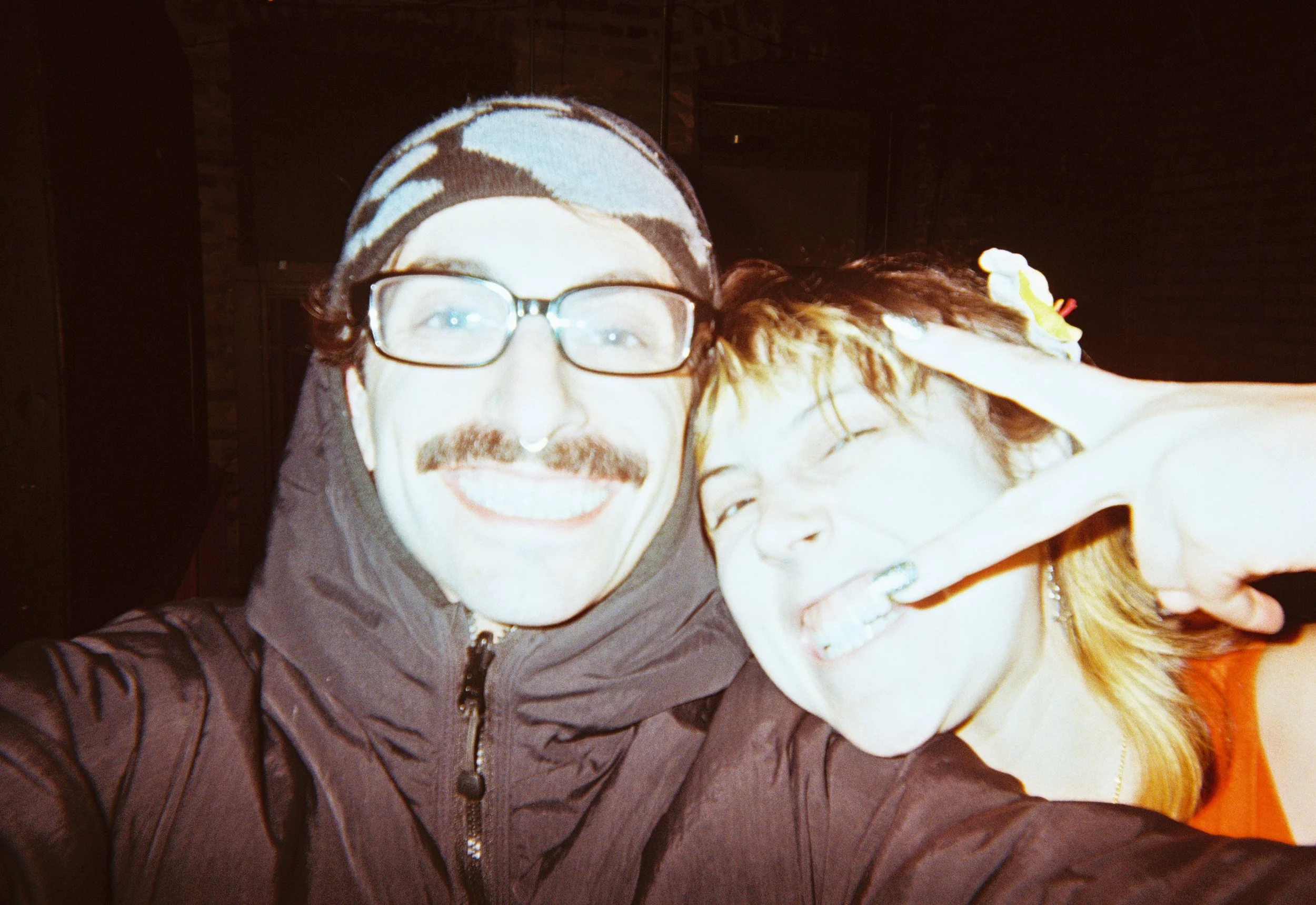
Playwright Jake Flum and director Ava Calabrese Grob. Photo courtesy of Facility Theater.
Madeline: I think a lot of people can see themselves in the romantic nihilism of Charlie and Anna. They're desperate for connection, trying and failing and trying again and maybe succeeding, laying out the beautiful and the ugly parts of themselves and wondering if they'll be held by each other regardless. How much of yourself do you put in your own writing? And do you think it's necessary to dig toward the deepest parts of yourself to create honest characters?
Jake: This is my dream, this is my experiment, this is my thesis: I think what I'm most interested in is for this play to be a Rorschach test. This is a vessel where things happen on stage. Some of them are quite brutal in my opinion, like what’s happening on stage, and I'm interested in the experience of the viewer and what it generates. What I believe, hopefully, is that reactions to this piece actually say more about you than the piece itself.
I think this is a play that is supposed to be gestated upon and then explored with people. What people say has been very interesting to me. Some people have talked about how this is a play about the patheticness of men's attempt to be dominant over women. Some have told me that this is a play that really attempts—especially in the way it's produced, not as much on the page—depicting an eating disorder. People have talked to me about how this is a play about women's complicity in misogyny and navigation of it, maybe even their power within it. All of these things are super interesting to me, and I'm so grateful to have had these conversations with people who've taken their time to see this. That's what I really think my gold standard is: for it to generate a reaction in people that is visceral enough that you can identify it and share it with others, share the differences, to begin to talk about the way that we're subdued by this culture of misogyny and patriarchy and how we're each differently affected by it but universally within it.
I barely answered your question. But I think what's important is my attempt with this, and it's been a struggle for some people to engage in because I think it's not everyone's taste. This is not necessarily a narrative piece. There's not really a beginning and a middle and an end. I guess there kind of is, but I put words on a page and actions on a page with someone who's a man and someone who's a woman. I wrote about what I felt was my inclination towards subjugation, my attraction to the degradation of women in a way that was terrifying and also weirdly socially empowered. In a way, I was really disturbed when I started to excavate it. It's been fascinating and interesting to see other people have a different experience with the same material. Its job as a Rorschach is what is really important to me.
Madeline: I like calling it that, and that kind of makes me wonder something else now. When you got to see it for the first time—put on as a full production, not in the rehearsals—I don't know when that was, but I'm curious, was there anything that surprised you as the writer seeing it for the first time? Any moments or choices that shocked you?
Jake: I think how uncomfortable it was for me. I wrote it to be incredibly uncomfortable, and then it totally was. For me, it was incredibly difficult to watch. I was squirming all over the place at how sad, how devastatingly tragic it was. Maybe this is interesting: the whole ending sequence I find to be incredibly sad. It moves me, and I find it incredibly tragic. Deeply, deeply, profoundly sad. Women, I've found—especially the last line, the secret that he says to her, which is that "I want to make a porn of my life"—that gets laughs [from women], and I don't hear a lot of men laughing at it, I’ll tell you that much. It's interesting, because again, it speaks to the different experiences of these people. And how fucking pathetic is this, right? How fucking pathetic is it to say that? I hear men laughing at it too, I suppose. But it's just that some things can be sad, some things can be happy. I just like seeing the difference. The variation in reactions has been a fun surprise for me.
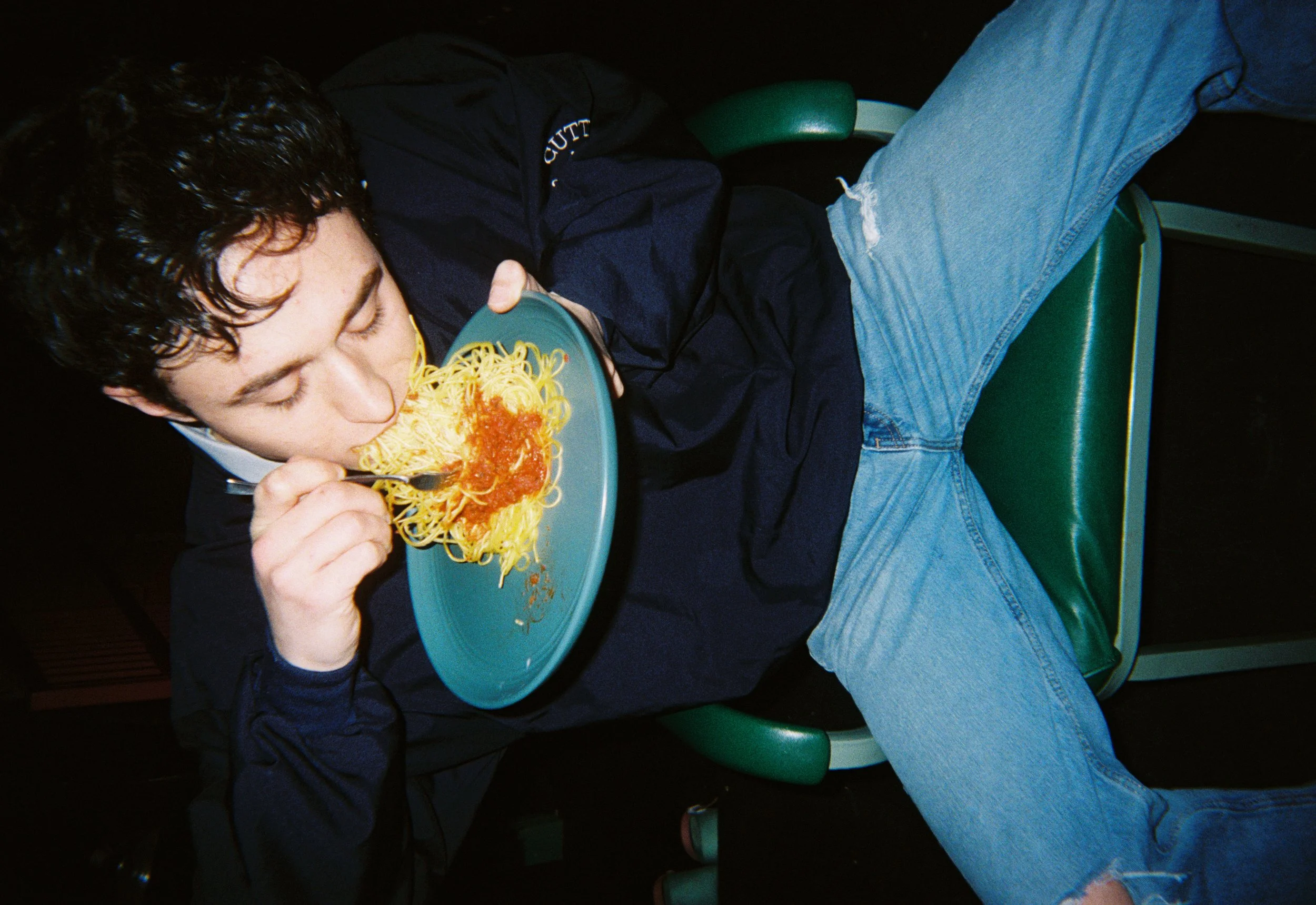
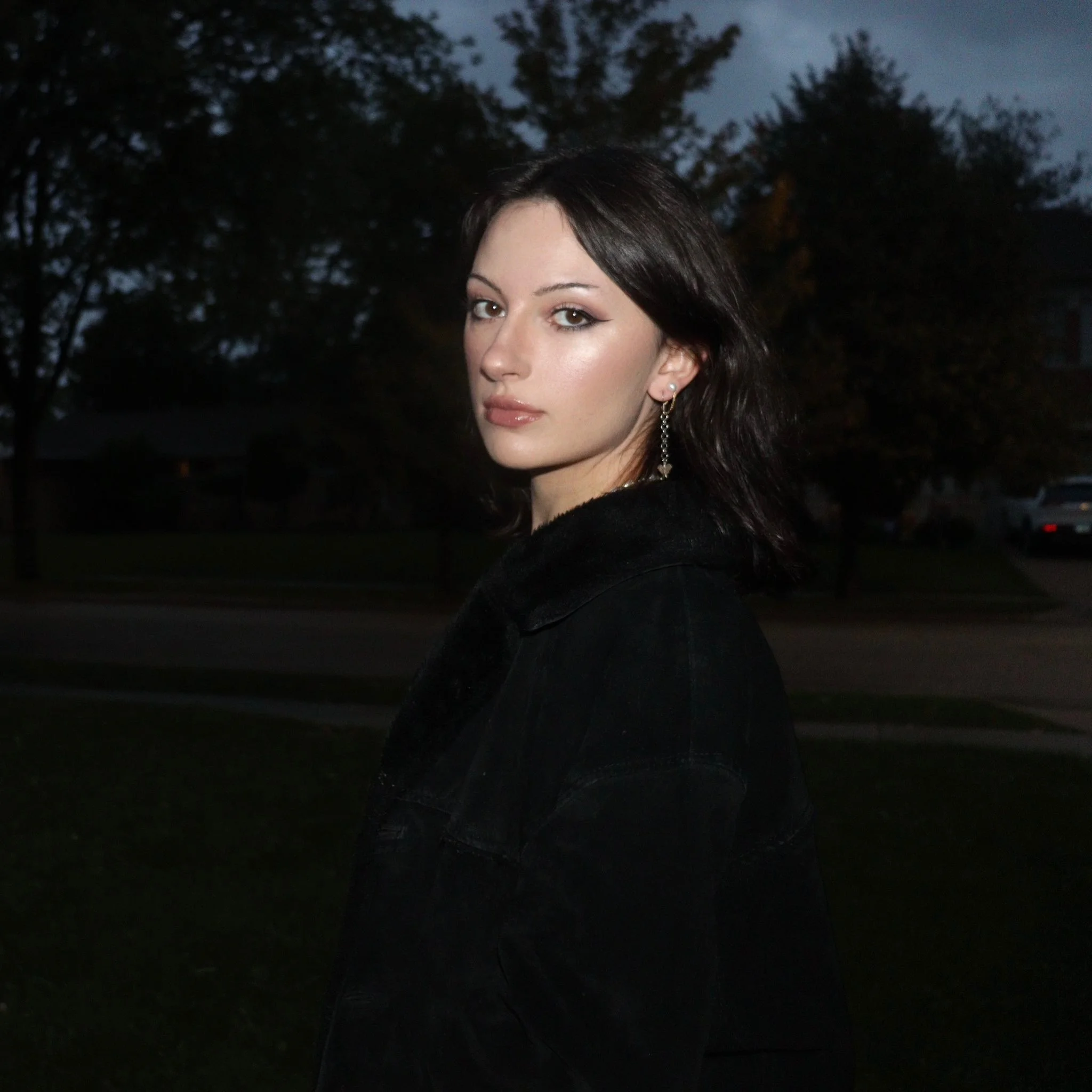
Actor Danny Tramontana as Charlie. Photo courtesy of Facility Theater.
Madeline: Yes, that reminds me of a scene. I think it was where Charlie was giving his alpha male monologue, about two-thirds of the way through, and everyone was laughing at that. I heard a lot of people giggling, laughing, and I was, like, tearing up.
Jake: Yeah, also it's like, that's dangerous! This is a live wire, totally. To your point about what you said initially, that, “I feel like they've been on two dates because this happened to me, so it kind of felt like that.” I'm not gonna go as far as guessing what happened to you, but to me, what you just said implies that you've been affected by this in a way in your real life. To be able to see that, to be able to have someone talking like that, I think is an important contribution to the conversation about this play.
Madeline: Selfishly, I have one last creative question—because in my own process, I normally write and direct my own stuff—so you and Ava working together, I want to know more about that working relationship, the discussions you guys had. What did that look like concretely?
Jake: First of all, it was really important to me that this play was directed by a woman or someone who is not a man. That was very important to add that perspective to it because of the themes. Ava had been in my circle for a little while, and I had initially approached her about doing it at Rhino Fest. We had kind of an attempt to put this up, but then it fell apart because of time constraints. We wanted to do it bigger, which I'm happy we did. But Ava was involved in the project the first time.
Ava and I share a lot of esoteric things that we like about theater—our playwrights who we like, the things that happen, our themes that we like—so we were kind of in the same world, and she’s like a total workhorse. She fully dedicates herself to the work. Okay, I'm gonna spill the tea a little bit here, but I believe that right before production started, she spent a night sleeping in the cage. She sends it. She really goes there.
Madeline: That's brilliant.
Jake: I mean, she completely lives in this world. It's nice because, yes, I wrote it, and it was about things that are very, very deeply personal to me, but theater is a medium of collaboration, and to a certain extent a medium of compromise. Somebody told me once, and I've always thought about this, that art is an artifact. Especially the internet, it's like an artifact of the work that's been done in the past. Ava and I spent a really long time talking about these themes, engaging with them, discussing misogyny, things like pornography and porn culture and looks-maxxing and inceldom and rape culture and violence and feminism. We developed a glossary of ideas the first time that we attempted to approach this script and got on the same page about what this play is trying to do.
I think when people are in a position where they’re empowered to fill this world with their ideas and lived experiences and make that compromise and collaborate, they defend the fuck out of it. That's what happened, I think, with this play. That's how we achieve the safety to be able to have nudity on stage, or the safety to put someone in such a compromising position that they could be inside of a cage or be degraded—all of these ways to be able to do that, you have to have someone who’s ready to defend their experience. I think everyone in this direction feels like they're part of it because they've had room to have a voice, to be heard in this process and to contribute their perspective to it. I think that's a testament to Ava's orchestration, but also that's a big reason why I was not there. If I was to endlessly provide answers, I think it wouldn't have given people room to live in this world, and then be able to defend this world. I think that's what makes the difference.
A lot of productions that I see, they're trying to say something to you. I think that it's much more powerful when it's a group of people asking some out-of-pocket questions.
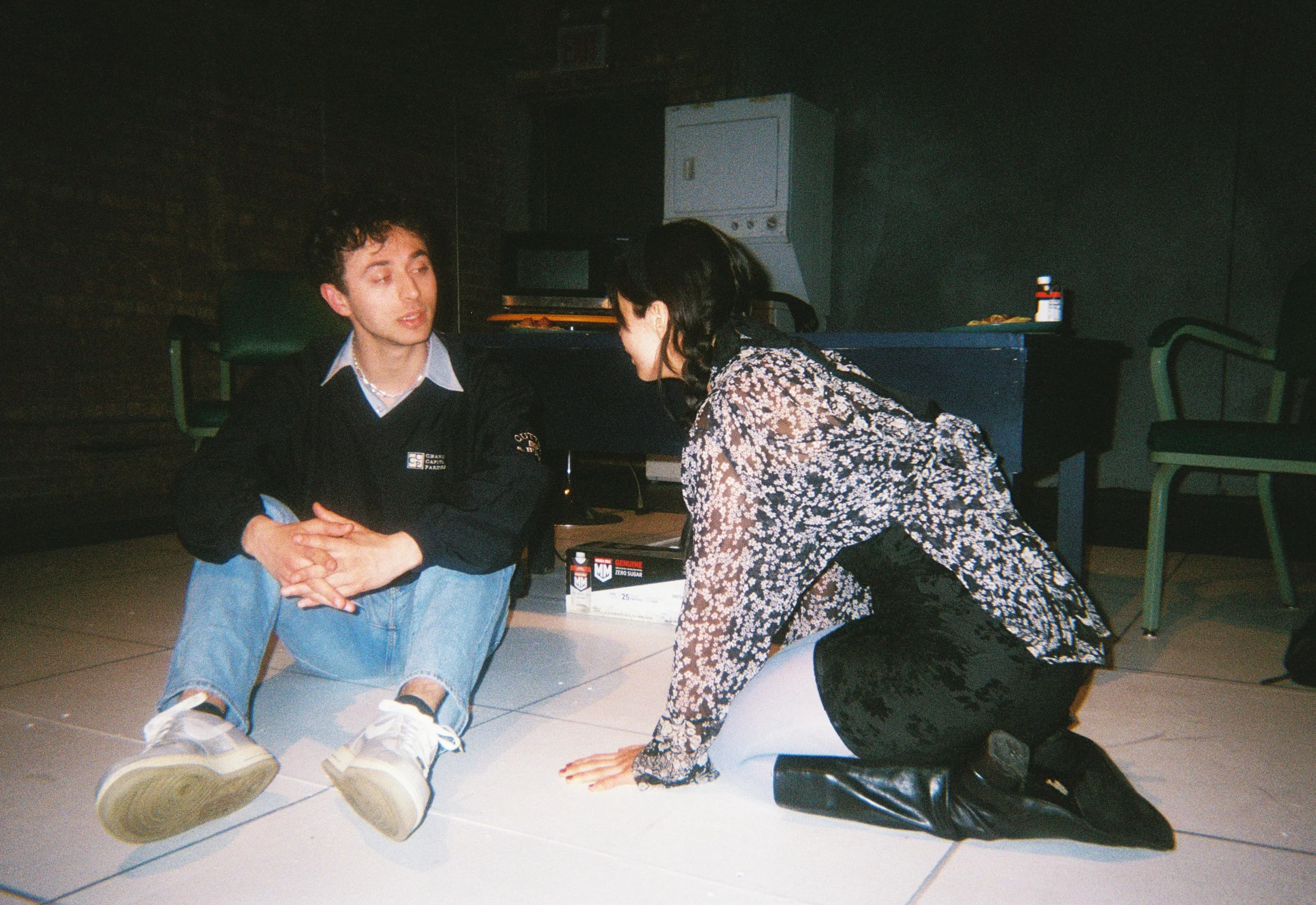
Actors Ilirida Memedovski and Danny Tramontana. Photo courtesy of Facility Theater.
Madeline: Really beautiful answer. My last real question, maybe it's an easy one, maybe it's a hard one, I don't know. Where do you see yourself going next, now that the show is almost over?
Jake: I want to continue to make good, fast, and cheap art with my friends. I want to try to write something with two acts. I want to play with the line between challenging people and pissing them off. I want to build something new at Facility Theater. I’m running a masculinity support group this summer. I’m in a HATE/LAB play in August… I want to do some grilling and drink a beer.
Madeline: Well, that's perfect.
Jake Flum is a playwright and psychotherapist based in Chicago, IL. Previous work includes ANIMAL PLAY, PERFORATED PLAY (finalist for Best New Play - Best of Chicago Reader 2022), and Date. He is a company member of Facility Theater and HATE/LAB (@hatelab.info). Previous work has been produced by Rhinoceros Theater Festival, Avrom Farm Party, and Runaways Lab Theater. Talk with him at jakeflum@gmail.com.