
A Conversation with Anna Nguyen
Anna Nguyen has been a displaced PhD student for many years, in many different programs and departments at many different universities in many different countries. She decided to rewrite her dissertation in the form of creative non-fiction as an MFA student at Stonecoast at the University of Southern Maine, which blends her theoretical training in literary analysis, science and technology studies, and social theory to reflect on institutions, language, expertise, the role of citations, and food. She is also preparing for her second MFA, in poetry, at New England College where she is an adjunct instructor. She also hosts a podcast, Critical Literary Consumption, which features authors, poets, and scholars discussing their written work and their thoughts on reading and writing practices. Find her on Twitter and Instagram @anannadroid.
“Under the Chayote Vine” recounts Anna’s last days with her cat, Rui, who spent her life moving around the country. On the precipice of finding a permanent home, Rui was diagnosed with cancer and spent her final months fascinated, and perhaps comforted, by the chayote plant Anna received from her mother. Once Rui passed, Anna buried her in the yard of her new home and planted the chayote in the same spot to honor her memory.
Anna’s mother had been urging her to cultivate a garden, and “Under the Chayote Vine” ties this cultivation together with the burden of being away from home, stability, and family. As we discussed her poem, it almost felt like tragedy struck twice when I heard the fate of the chayote vine, which did not—and will never—yield fruit. Then again, her mother is sending another plant, so hope springs eternal.
An interesting thing happened while writing up this interview transcript. There were a few points where I was uncertain if Anna was talking about her cat, her mother, or herself. Like any good poem, “Under the Chayote Vine” is a lot like Shrek… or onions… or parfaits. Unravel the layers of Anna’s poem with us in our discussion below.
Anna’s poem, “Under the Chayote Vine,” can be read in Issue no. 1 of Sabr Tooth Tiger Magazine.
Juan: Tell us a bit about your relationship with your cat; when did you adopt her and what was she like?
Anna: I wrote that poem a few months after my cat died, and it was for my first MFA packet for my poetry residency. We adopted Rui—she’s a Tortie—in 2014 in Seattle when my partner and I moved from Arkansas to Seattle for his PhD studies, and I felt a bit isolated. It was my first time living away from my family, and so he thought it would be a good idea if I adopted a cat. So we went to the shelter and adopted her.
She stayed with us until she was fifteen, so about thirteen years. I think like any person with a cat, we all tend to think we have very special relationships with our animals, but for my relationship with Rui, it was based on precarity because my partner and I moved around a lot in different parts of the world, and we always took Rui along because of our academic careers.
For me, when I talk about my cat, it’s very hard now because I felt like I didn’t give her a stable home. When we finally relocated back to Boston, we had a house, and she had been diagnosed with nasal cancer and lived her last four months in a new house that was unfurnished.
And the chayote vine that I titled for her, we received a star apple root from my mother. She brought back the root from Vietnam, and I left it in Maine before we moved to Boston and she kind of watched it grow. It was just kind of a tribute for my cat.
Juan: So she was just naturally drawn to that vine and had a connection?
Anna: It was a connection for her because we didn’t have a lot of plants given we moved around so much, but when we decided we were going to make Boston our home, it was a significant thing for us and for her because it would have been her first plant in Boston and home. So I wrote, “She watched it grow from plant to root,” for it to represent a sense of home.
Juan: You mentioned that your mother brought the root from Vietnam.
Anna: She claims it’s indigenous to Vietnam, but if you do research, a lot of countries claim it. But I know I grew up eating it, and for her, it reminds me of her home because she was born and raised in Vietnam.
But we only ever grew it when I was a child in Arkansas. It was something that I really loved eating. The idea from her was that I cultivate my own garden. She said, “You can use this as a starter.”
I think in the poem, I mention that I waited to plant it outside because it had been sitting in a pot in my office when Rui was still alive, and she just kind of watched it. Sometimes, she’d paw at it. But after she passed away, I just didn’t have a lot of motivation to think about planting a chayote.
My mother would always ask, “Did you finally plant it outside?”
And I just waited around. When we received our cats ashes, that’s when I decided maybe it’s time to plant it, so we can bury Rui’s ashes underneath the plant because she loved it so much. I think that was a decision that affected my mother because, had we planted it earlier, I think it would have yielded chayote, but now it’s just kind of leaves and vines. I don’t think there’s going to be a crop for it.
Juan: That’s kind of sad to hear.
Anna: [Laughs]
It’s a beautiful plant. Have you seen a chayote? It was a really big one that she kind of cultivated for me so I could finally plant it, but… I just didn’t. It’s pretty impressive. She was proud of it; I think that’s why she was so upset that I didn’t plant it.
Juan: Is she very much into gardening?
Anna: She loves gardening, yeah.
Juan: What makes it a starter plant?
Anna: You’re supposed to grow it as big as you can. It was my understanding that you don’t grow it to eat if it’s that big, but you grow it so you can yield crops. She calls it a starter—which is weird, because you saw how big it was, right? Really big!
It started sprouting. You’re supposed to nourish it in the sun, and it sprouts leaves. I put it indoors, so this is Rui trying to eat it.
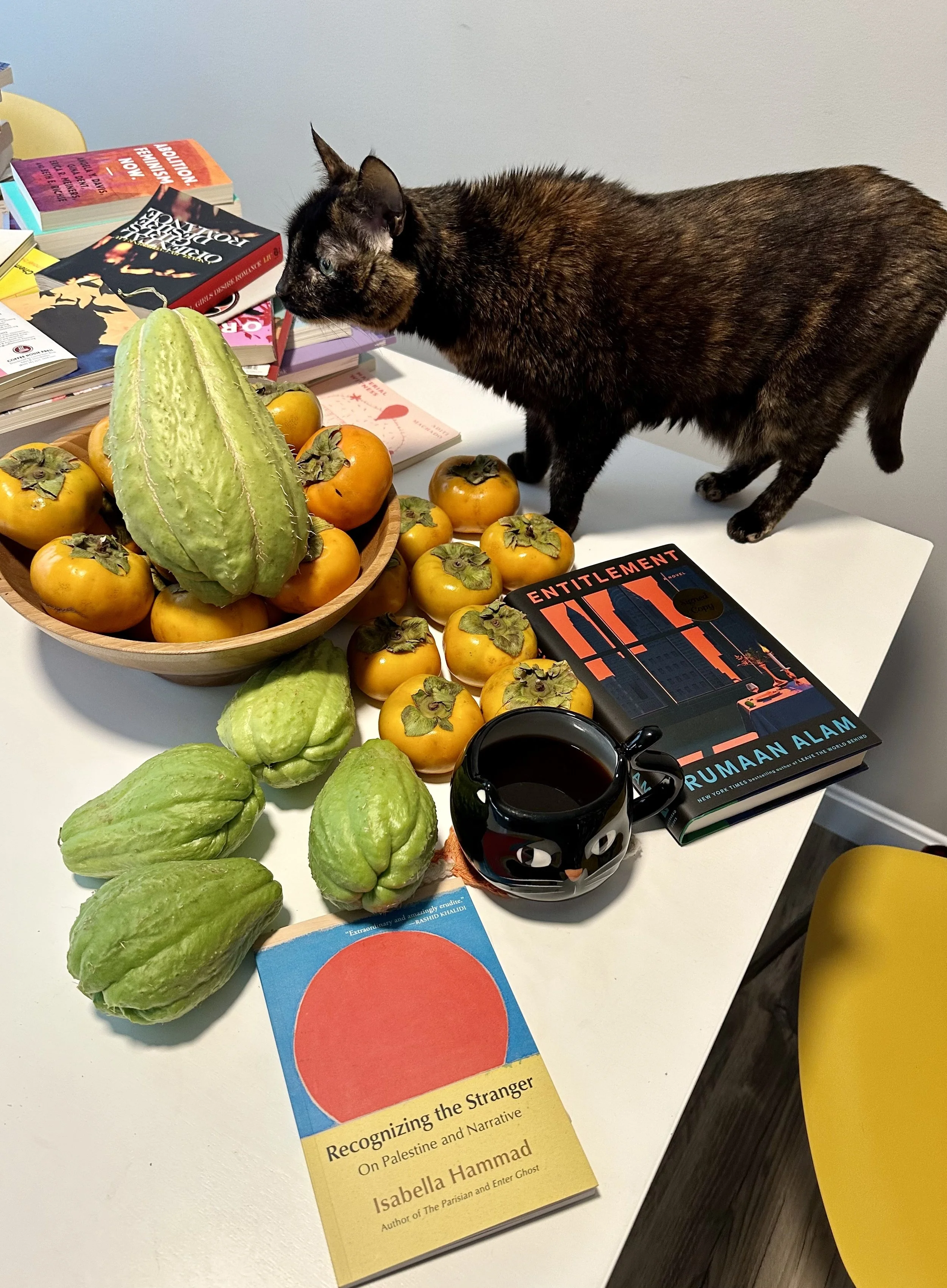
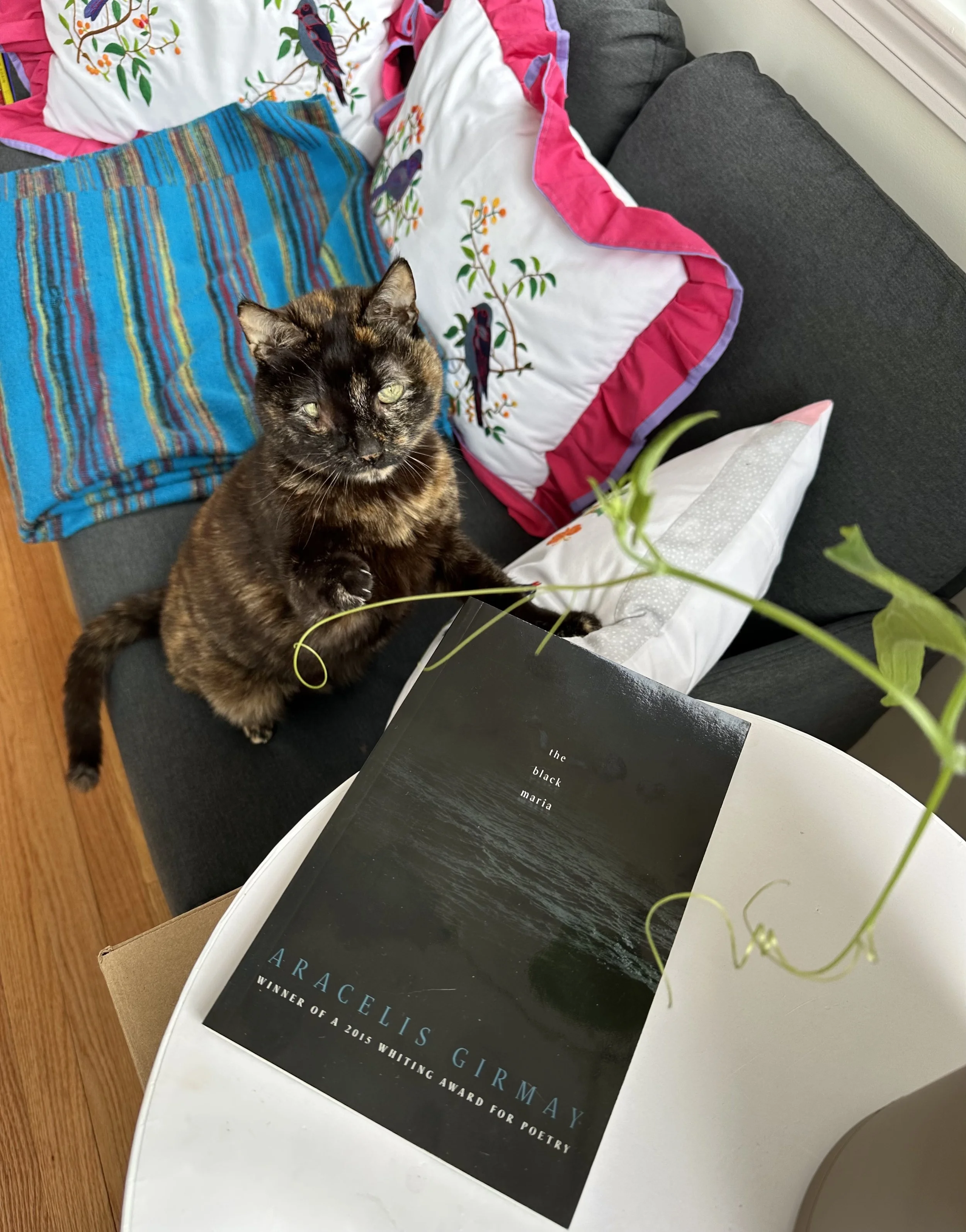
It looks smaller because the leaves expand a lot, so there are a lot of vines. When we put it outside, we had to create a trellis so the vines and leaves circle around it. And, if it was a successful plant, little squashes would be hanging on to the vines, but I think I just didn’t plant it in time…
Juan: Is it definitely not able to produce fruit?
Anna: She said if it hadn’t yielded crops at the end of summer (a few months prior), it would be a dead plant. But funnily enough, I talked to her tonight, and she’s sending me another chayote crop so I could try again. She said, “Just be smart this time; do it as soon as you can.”
I want to mention that she’s met my cat many times. She loves my cat, but she couldn’t understand why I’d care that much about the plant compared to the grieving of a cat.
Juan: Do you think your mom has other ties to the plant since she associates it with her family and heritage?
Anna: She has family in Vietnam, and her family has their own farm, so she still ships me a lot of stuff from Vietnam. But I think her sense of home… for me, it’s a bit peculiar. She’s lived in the States longer than she has in Vietnam, based on her age. I think her gardens, to her, may just be her memories of living in Vietnam. She still gardens in her late life. She’s 78.
She doesn’t know what life would be like without her gardens. Growing up, we would have four or five gardens at a time. She still gardens, and she brings everything inside.
If I were to say I’m a crazy cat person, I would say she’s a crazy plant person, you know?
Juan: I’m more similar to you in that regard. I don’t think I have a single plant in my house.
Anna: I’m trying, I’m trying. She says she’s sending me peppers and other flowers she remembers growing in Vietnam, so when that package comes… we’ll see. She said she sent me a lot to plant, but I don’t think I inherited her green thumb.
Juan: Some things take practice. Are you more culinarily inclined?
Anna: Yeah, I cook. I usually make chayote soup. I like to cook, but I think now that I’m older and cook more for myself, I wish I did have a garden like my mom.
She’ll come in the summer and I’ll have her help me start a garden… and—do you have any cats?
Juan: Yes, I have three.
Anna: It’s hard to keep plants with cats around.
Juan: I don’t have plants, so I don’t know.
Anna: I mean, when we did have small plants, Rui would dig up everything. So we just found it easier to… not.
Juan: Yeah, they’re curious.
Anna: And then you have to worry about what is toxic and what isn’t toxic. My neighbor just gave us some Dahlia flowers, and if you look it up, the first thing it says is that Dahlias are toxic for cats. So we had to hide the flowers in the bathroom and lock it up so my current cat can’t eat it.
Juan: Does your family eat chayote a lot? We always incorporated it into chicken soup, but I am wondering if you have a favorite recipe.
Anna: I think I learned this from my mother, the way she cooks Vietnamese cuisine is always—she calls it: a bowl of rice and two soup selections. I think that’s how you translate it…
I don’t know if it’s an issue of creativity or if that’s how she was taught to cook, but growing up, we ate a bunch of soup dishes.
It's a clear liquid base and just a bunch of stuff in it. Sometimes, she puts meat in it, but I think my affinity for soups came from my memory of rice and different soups, but it’s mainly from vegetables that she grew in Arkansas. It’s actually really easy; you just boil some water and season it, and I like to pour it on my rice.
I even do that with ramen broth and some people think it’s strange, but it’s something I grew up doing.
Juan: Your cat’s ashes find rest under the chayote vine, providing nourishment and life to a plant that may or not bear fruit for you and your family. Did you find this cyclical nature of life to be a central part of the decision?
Anna: It’s funny you mention that. In the summertime, I always looked at the plant because I knew Rui was buried underneath it. In the summertime, there were a bunch of bunnies that would hop around underneath it. I was on the phone with my mother and I said, “Oh look, Rui became a bunny!” She thinks it’s nonsense, even though we were raised Buddhist, so I feel like she should believe that. But she kind of dismisses me.
I thought about… what would it mean, if I buried my cat there, and then the plant dies…. Would I know where we marked her? I wasn’t able to answer that question. I just knew I wanted to do something for her, and that she loved the plant. And even if it died, for me, it felt like a good decision. Whether or not it was cyclical, if my mom were actually to give me another chayote plant to plant again, I would probably put it in the same spot. She told me, if you don’t nurture [those plants] they don’t survive. I think by the time we had already planted the one she had gifted us, I think I knew it wasn’t going to survive because it was just too late. I guess I just didn’t care. I wanted to do something that I thought Rui would have loved.
Juan: It’s funny because you mentioned “maybe she’s a bunny,” and I think, maybe it didn’t yield fruit per se, but I figured the bunnies may have chewed on the leaves.
Anna: They did! And birds did too. We see the markings, so even if it didn’t grow anything, at least I’m glad to know it was at least nourishing some other animal form.
Juan: Your story suggests you moved often. Do you find peace and solace in the rest offered to your cat by the chayote? Do you feel the chayote is ephemeral, or that its presence bleeds into the ecosystem of your yard and that nature connects the living to life?
Anna: I think I alluded to this.
I think the idea of it growing from root to vine was more of a… it could be called a metaphor in some sense. People say you’re placing roots, or “your roots are here,” so I thought this extension was for Rui because she didn’t really have a permanent home. I think I was toying with the idea of “permanence” and “impermanence,” or what you were saying “ephemeral” would mean. Because I don’t think a lot of things survive even in the ecosystem. I have a rosemary plant that looks very bountiful, but if you don’t take care of it, it won’t survive.
I just think what I wanted to capture was, “How do you say goodbye to your companion who lived with you for so long and under really bad circumstances?” and what does it mean to have a home when it wasn’t a home for your animal friend who you wanted to give a home to? You know? I’m trying not to tear up because it’s really hard for me to talk about my cat because she died in really bad circumstances, but I wanted to write a nice poem. Maybe slightly sad, but hopefully it was kind of wistful in some sense.
I think it’s nice—I mean we’re very lucky to have a home, but the circumstance of having a home and losing my cat, it’s just something I can’t reconcile with.
Juan: I felt that. It felt kind of tragic. I always think of Moses not being able to enter the promised land. He gets to see it, but—
Anna: Yeah.
Juan: I relate to it as well. I have a similar story with my dog, and I think that’s something a lot of people can resonate with. That’s why your piece is such a nice one to include.
Anna: You know I read that very poem in my residency and I just started bawling. I’m laughing now, but I read three poems, and I just couldn’t stop crying. Thank you for your questions and for having it in Sabr Tooth.
I should say, I wrote it a month after my cat passed away because I had to make the deadline for my residency. So maybe I would have written it differently had I let myself grieve a bit more, but I think I like the poem the way it is.
Juan: We liked it, too!
Anna: Well, thank you. Thank you for talking about grief and for talking with me about this.
Juan: Of course! Before we go, do you have any shoutouts or works you’d like to promote?
Anna: I host a podcast called Critical Literary Consumption. I have a lot of people on my podcast, poets like Chen Chen, Jennifer Wong, Susan Nguyen. It’s on iTunes… I just use the Podcast app. I release it on Anchor.FM, so I think it’s on Spotify too.

The debut issue of Sabr Tooth Tiger Magazine. 6×9 paperback, 134 pages.
Poetry by: David Agyei-Yeboah, Maude B., Madeline Blair, Ace Boggess, Ashlee Craft, Zach Crosswait, Zoë Davis, Gavin DuBois, Mal Grace, Erica Hasselbach, Asmi Kartikeya, Daithí Kearney, Maëlle Keita, Ayesha Khan, Emma Lee, Juan Madrigal, Faisal Mohyuddin, Phoebe Nerem, Benjamin Niespodziany, Vaghawan Ojha, Samuel Plauché, Colette Postaer, David Raygoza, Tori Rego, Maddy Rowe, Patricia Russo, Satori, Ayden Scott, Brandon Shane, Sameen Shakya, Anca Varvara-Piccozzi, Ethan Viets-VanLear, Rebecca Watson, Jenny Whidden, gray lindsey, Ammara Younas, Zaid Zaheer
Prose by: B.E. Austin, Johnzee Baptiste, Rohit Karir, Sara Muttar, Sarah R. New, Anna Nguyen, Farhan Nurdiansyah, Eli Sugerman, Dylan Terry
Art by: Fatima B., Bea Bouman, Nathan Doty, Bushra Khan, mahnoor, Zafar Malik, Stefanie Reinhart
Please note that copies are printed-to-order and can take up to one month to be delivered.